 EN
EN
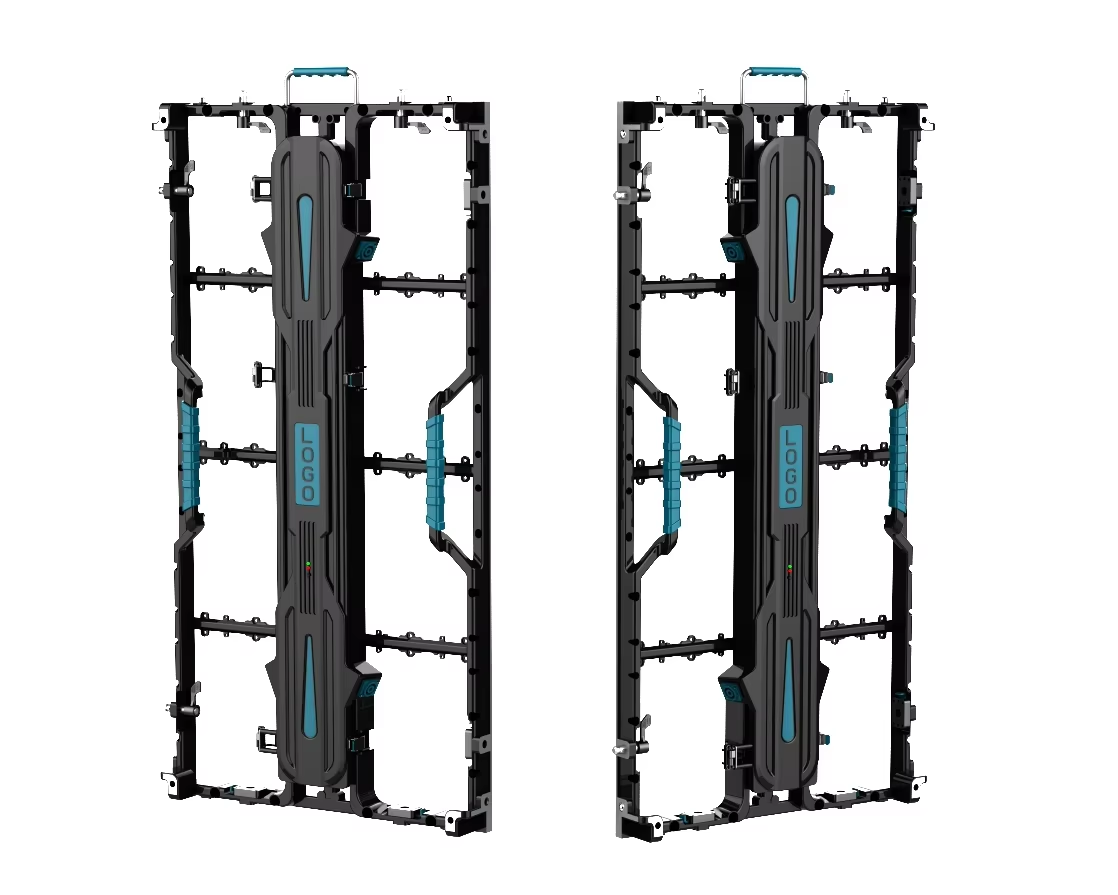
LED Rental Cabinet Structural Design: Lightweight Materials and Rugged Protection
The structural design of an LED rental cabinet directly determines transport costs, setup speed, and long-term reliability. Engineers balance weight and durability using two primary materials: die-cast aluminum and magnesium alloy. A typical die-cast aluminum cabinet weighs 7–10 kg—light enough for a single technician to lift and lock, yet stiff enough to maintain precise alignment across repeated assemblies. High-precision molds ensure consistent 0.1 mm tolerance, essential for seamless video walls under real-world touring conditions.
Die-Cast Aluminum vs. Magnesium Alloy for High-Frequency Transport
Die-cast aluminum remains the industry standard for rental cabinets due to its optimal strength-to-weight ratio, corrosion resistance, and repairability. It reliably withstands the vibration, stacking, and impact inherent in frequent road transport. Magnesium alloy offers a 30–40% weight reduction but introduces higher material and surface-treatment costs—and requires careful isolation from dissimilar metals to prevent galvanic corrosion. For most rental fleets, die-cast aluminum delivers the best operational balance: durable enough for multi-year service life, light enough to meet payload and fuel-efficiency targets (especially with per-unit weights under 10 kg), and straightforward to maintain on tour.
IP65/IP67 Ratings and GOB Encapsulation as Non-Negotiable Standards
Outdoor and mixed-environment events expose cabinets to rain, dust, thermal shock, and physical stress. IP65 protection fully seals against water jets and airborne particulates; IP67 adds temporary submersion resistance—both critical when rigs move between indoor conferences and outdoor festivals. Complementing this, GOB (Glue on Board) encapsulation applies a uniform, optically clear silicone layer directly over the LED modules, shielding them from moisture ingress, mechanical vibration, and minor impacts. Together, these features are non-negotiable: they prevent premature module failure, eliminate costly mid-event repairs, and extend cabinet lifespan across diverse deployment cycles.
LED Rental Cabinet Installation Efficiency: Fast-Assembly Systems and Portability Features
Fast installation is a defining advantage of modern LED rental cabinets—events demand rapid, error-resistant setup and teardown. Mechanical innovations reduce labor dependency, minimize human error, and accelerate reconfiguration between venues, making today’s systems ideal for touring productions, corporate conferences, and large-scale festivals.
Fast-Lock Mechanisms and Precision Alignment for Sub-60-Second Panel Engagement
Tool-free, spring-loaded quick-lock systems—paired with hardened alignment pins—enable a single operator to secure a panel in under 10 seconds. Combined with die-cast aluminum’s inherent dimensional stability (maintaining 0.1 mm mechanical accuracy over hundreds of assembly cycles), this ensures gap-free, pixel-perfect connections every time. The result? Consistent visual continuity across large-format video walls without manual shimming or post-installation calibration.
Flight-Case Integration and Stacking/Hanging Compatibility
Portability extends beyond the cabinet: each unit is engineered to fit precisely into standard ATA-rated flight cases, safeguarding electronics during transit. On-site, universal mounting interfaces support both floor stacking and overhead hanging—enabling flexible deployment whether rigging infrastructure is available or not. Stacking suits indoor stages and trade shows; hanging maximizes floor space at concerts and exhibitions. Integrated safety locks, anti-skid handles, and load-rated rigging points ensure secure handling in either mode—empowering small crews to reconfigure displays rapidly and safely across back-to-back events.
Application-Specific LED Rental Cabinet Matching: Pixel Pitch, Size, and Environment
Pixel Pitch Guidelines: From 1.2mm for Indoor Conferences to 4.8mm for Outdoor Festivals
Pixel pitch selection must align with viewing distance, ambient lighting, and budget—not just technical capability. Indoor applications—including corporate conferences and broadcast studios—require fine pitches (P1.2mm–P1.95mm) to deliver sharp, legible imagery at close range (1–10 meters). These densities preserve detail and color fidelity where audiences engage directly with content. Outdoor venues, by contrast, prioritize brightness, contrast, and cost-efficiency over ultra-fine resolution. P3.91mm–P4.8mm cabinets deliver excellent visibility beyond 15 meters in daylight while resisting washout from ambient light—making them the practical standard for festivals, sports arenas, and street-facing signage. Overspecifying pixel density indoors inflates cost and power draw unnecessarily; underspecifying outdoors compromises readability and perceived quality. Match pitch deliberately: it’s the first and most consequential decision in system design.
FAQ
What materials are commonly used in LED rental cabinets?
Die-cast aluminum and magnesium alloy are the two primary materials used. Die-cast aluminum is preferred for its strength-to-weight ratio and durability, while magnesium alloy offers a lighter weight option with higher costs.
What is GOB encapsulation, and why is it important?
GOB (Glue on Board) encapsulation involves applying a clear silicone layer over LED modules. It protects against moisture, vibration, and impact, ensuring durability during frequent transport and long-term use.
How should pixel pitch be selected for LED rental cabinets?
Pixel pitch depends on viewing distance and usage environment. For indoor events, fine pitches (1.2mm–1.95mm) are ideal, while outdoor venues typically require coarser pitches (3.91mm–4.8mm) for readability and cost-effectiveness.