
 EN
EN
What OEM Partnership Means in the LED Display Cabinet Industry
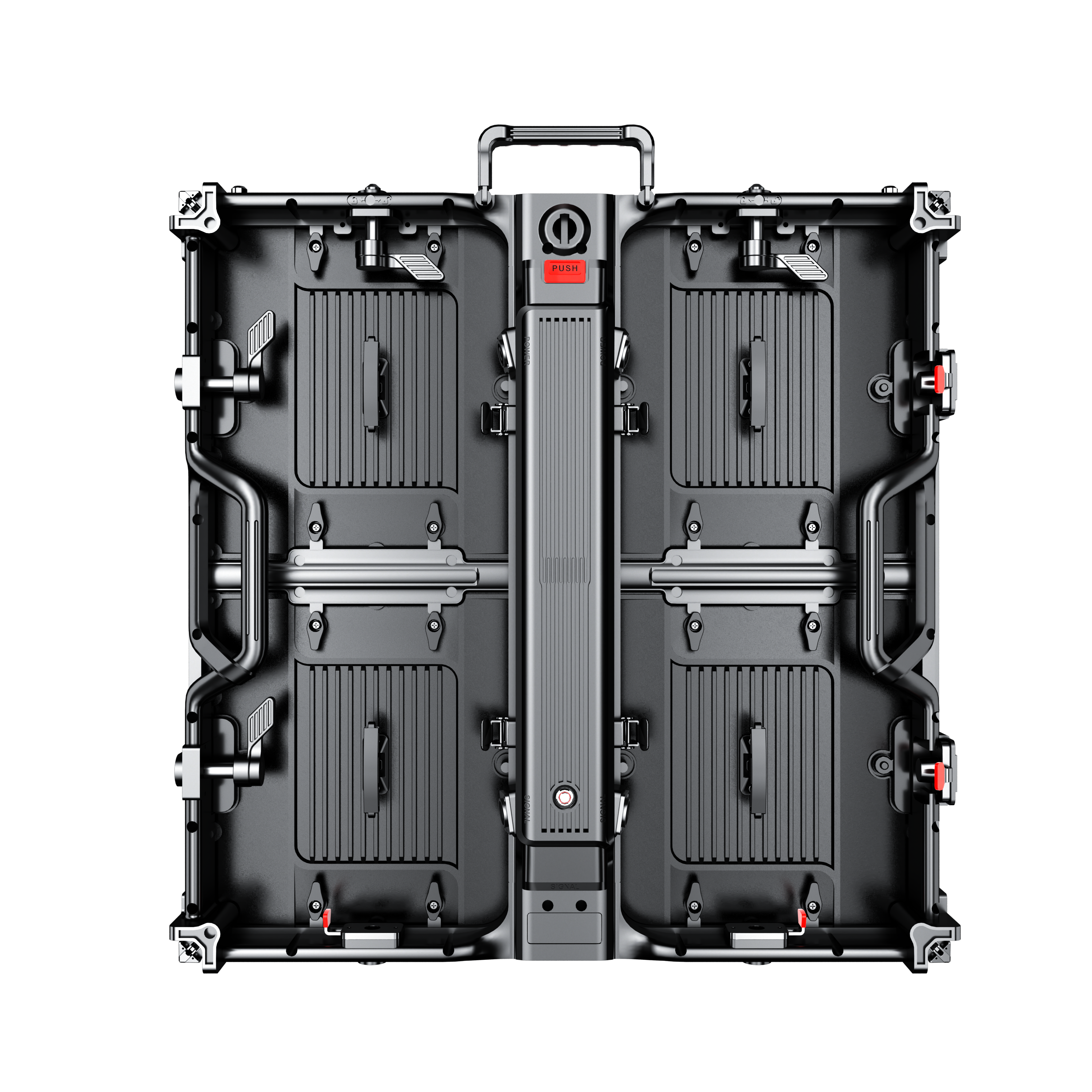
In the LED display supply chain, OEM manufacturing of cabinets represents a distinct category from off-the-shelf purchasing. When you engage an OEM led display cabinet manufacturer, you are not simply buying standard enclosures from a catalog; you are entering a collaborative relationship where the manufacturer produces cabinets to your specifications, often with your branding, and tailored to your specific LED module dimensions, target markets, and installation requirements. The right OEM partner can become a competitive advantage, reducing your time-to-market for new display products, lowering per-unit costs through production efficiency, and providing engineering support that would be expensive to build in-house. The wrong partnership can result in quality disputes, delivery delays, and intellectual property concerns that erode your market position. This guide outlines how to identify, evaluate, and partner with an OEM led display cabinet manufacturer who can reliably support your business growth.
Evaluating Manufacturing Depth and Engineering Capability
The first filter in OEM partner selection is manufacturing capability. An OEM relationship requires the manufacturer to do more than produce cabinets from existing tooling; they must be able to develop new molds, adapt designs to your requirements, optimize structures for cost and performance, and maintain quality across production runs. Look for a led display cabinet manufacturer with in-house die-casting operations rather than one that outsources casting to third-party foundries. In-house casting gives the manufacturer direct control over mold design, alloy specification, cycle parameters, and quality inspection at the source. CNC machining capability is equally important, as post-casting machining determines the final dimensional accuracy of every mounting point, alignment feature, and locking interface. Manufacturers operating their own CNC machining centers can maintain tighter tolerances and respond faster to design changes than those who subcontract machining. Factory scale is another indicator. A facility with over 30,000 square meters of production space and multiple dedicated production lines for different cabinet types suggests the operational depth to handle your order volumes without diverting capacity from other clients.
Technical Team and Design Support
A strong OEM partnership depends as much on engineering communication as on production hardware. Evaluate the manufacturer's engineering team size, their experience with LED display structures specifically, and their proficiency with CAD software for design collaboration. A capable OEM led display cabinet manufacturer should be able to receive your module specifications and cabinet concept, produce detailed engineering drawings for your approval, and suggest structural optimizations based on their production experience. For example, an experienced engineering team might recommend adjustments to rib placement that reduce cabinet weight by 8 to 12 percent without compromising flatness, or suggest a modified locking mechanism that speeds up assembly time for your rental-market customers. Ask about their NPI (New Product Introduction) process specifically. How many design review rounds are included in a typical mold development project? What is their standard lead time from design freeze to first article samples? Do they provide FEA (Finite Element Analysis) reports for structural validation of custom designs? The answers to these questions reveal whether a manufacturer approaches OEM work as a value-added service or simply as a volume play.
Quality Systems That Scale with Your Business
Quality assurance in an OEM relationship must be systematic, not reactive. A led display cabinet manufacturer serving OEM clients should maintain ISO 9001 certified quality management systems and ideally hold additional certifications relevant to your target markets, such as CE marking compliance for European distribution or RoHS compliance for environmental standards. Beyond certifications, examine their in-process quality control procedures. Do they perform first-article inspection for every new production batch? What sampling rate do they apply for dimensional checks during production runs? How do they track and document quality data for traceability? A manufacturer that uses statistical process control methods and maintains digital quality records provides the consistency and transparency needed for long-term OEM partnerships. Some manufacturers recognized as National High-Tech Enterprises or Provincial Specialized and Sophisticated SMEs have invested in comprehensive quality infrastructure, including coordinate measuring machines, spectrometers for alloy verification, and environmental test chambers for accelerated aging tests.
A Partnership That Scaled Successfully
A European LED display brand was expanding from rental-stage products into the fixed-installation corporate market and needed a new cabinet platform that could accommodate three different module sizes while meeting stricter flatness and aesthetic requirements. Their existing supplier, a general metal fabricator, struggled to achieve consistent flatness below 0.5 mm and could not provide the front-maintenance mechanism the corporate market demanded. The brand switched to an OEM led display cabinet manufacturer in Shenzhen with dedicated die-casting capabilities and a 25-person engineering team. Over a four-month development cycle, the manufacturer produced three rounds of prototypes, conducted FEA validation of the cabinet structure, and ultimately delivered a platform that achieved 0.22 mm flatness consistency, weighed 15 percent less than the previous iron-cabinet equivalent, and supported both front and rear maintenance configurations from the same base design. The new cabinet platform became the foundation for the brand's corporate product line, contributing to a 40 percent revenue increase in that segment within 18 months. This case illustrates how the right OEM partner adds value beyond unit cost, creating product-level competitive advantages that drive market growth.
Supply Chain Reliability and Intellectual Property Protection
OEM partnerships involve sharing sensitive design information, so intellectual property protection must be addressed explicitly before any technical exchange begins. Discuss whether the manufacturer is willing to sign a mutual NDA, how they segregate customer tooling and designs, and whether they have policies against producing competing products using customer IP. A professional led display cabinet manufacturer should have clear IP protection protocols and be able to provide references from existing OEM clients who can verify their practices. Supply chain reliability is equally important. Ask about their raw material sourcing strategy, particularly for aluminum alloy ingots that form the basis of die-cast cabinets. Manufacturers with long-term supplier relationships and strategic alloy inventory can better insulate you from commodity price fluctuations and material shortages. Also discuss logistics: their experience with sea freight, air freight, and customs documentation for your target markets, and their standard packaging specifications for international shipping.
Frequently Asked Questions
What is a reasonable minimum order quantity for OEM LED display cabinets?
MOQs vary significantly depending on whether the project requires new mold development. For projects using existing molds with modifications to surface finish or machining specifications, MOQs of 100 to 300 units per design are common. Projects requiring entirely new molds typically have MOQs of 500 to 1,000 units to amortize the tooling investment, though some manufacturers offer phased production agreements where tooling costs are recovered gradually over multiple orders.
How long does it typically take from design approval to first production delivery?
For projects using modified existing molds, 6 to 10 weeks is a typical timeline. New mold development projects generally require 10 to 16 weeks from design freeze to first article samples, plus an additional 3 to 4 weeks for production ramp-up and quality validation. Complex designs with multiple mold cavities or integrated electronic mounting features may require longer development cycles.
How can I verify an OEM manufacturer's export experience and reliability?
Request references from existing OEM clients in your target region, and ask specifically about their experience with on-time delivery rates, quality consistency across multiple production runs, and responsiveness to engineering change requests. If possible, commission a factory audit through a third-party inspection service. A manufacturer that welcomes independent audits and provides transparent quality data demonstrates the reliability needed for a long-term OEM partnership.
Table of Contents
- What OEM Partnership Means in the LED Display Cabinet Industry
- Evaluating Manufacturing Depth and Engineering Capability
- Technical Team and Design Support
- Quality Systems That Scale with Your Business
- A Partnership That Scaled Successfully
- Supply Chain Reliability and Intellectual Property Protection
- Frequently Asked Questions