
 EN
EN
Understanding the Role of Cabinet Precision in Seamless Display Assembly
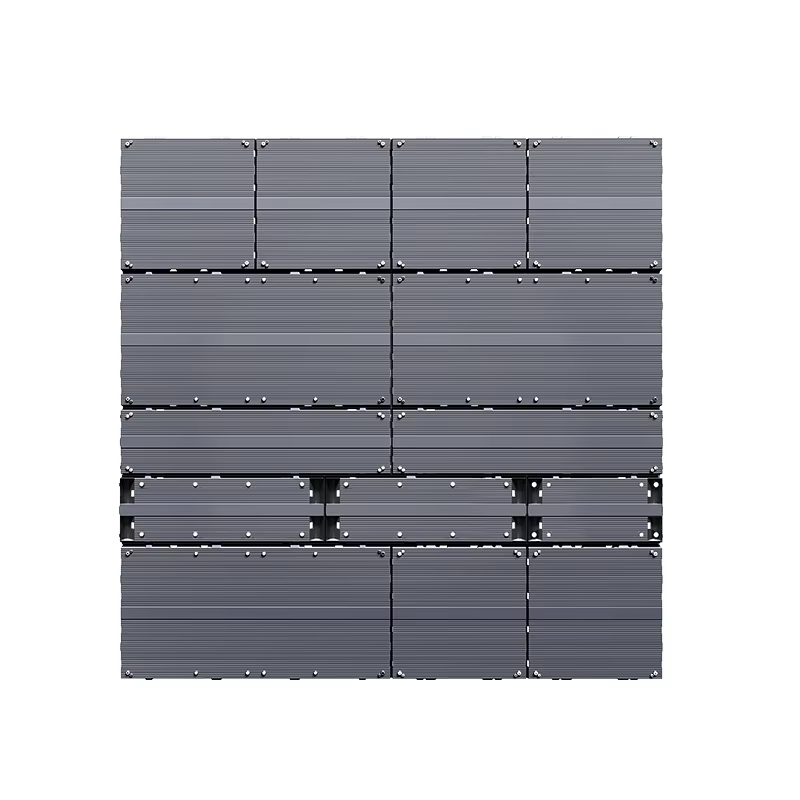
Seamless splicing is one of the most demanding requirements in LED display installation, and the cabinet itself is the single most important factor in achieving it. When multiple LED cabinets are assembled into a large video wall, even minor dimensional deviations in individual enclosures can compound across the array, creating visible gaps, brightness inconsistencies, or stepped misalignment that undermine the viewing experience. A high-quality led seamless splicing cabinet achieves its result not through a single feature but through a combination of precision die-casting, flatness control, robust locking mechanisms, and disciplined quality assurance. This guide explains what makes seamless splicing work from a cabinet engineering perspective and what to look for when sourcing enclosures for professional display projects ranging from corporate boardrooms to broadcast studios and command centers.
Precision Manufacturing as the Foundation of Seamless Assembly
The journey to seamless splicing begins in the mold. Die-cast aluminum cabinets achieve superior dimensional consistency because the entire frame structure is formed in a single casting cycle under controlled temperature and pressure. Unlike fabricated sheet metal cabinets that rely on welding and bending, die-cast enclosures benefit from repeatable mold geometry that keeps edge-to-edge tolerances within a fraction of a millimeter across production batches. Critical parameters include frame flatness, edge straightness, and corner squareness. A well-designed led seamless splicing cabinet should maintain a flatness tolerance of 0.3 mm or better across the mounting surface, since any wave or bow in the frame transfers directly to the LED modules and creates visible seam lines. CNC post-machining of critical reference surfaces further refines the casting, ensuring that every mounting hole, alignment pin, and locking point is positioned to match its neighbor exactly.
The Locking and Alignment System
Even perfectly machined cabinets cannot produce seamless results without a reliable inter-cabinet locking mechanism. Modern seamless splicing systems typically employ cam-lock or quick-lock fasteners positioned at multiple points along each edge, combined with precision alignment pins that guide adjacent cabinets into position before the locks engage. The best designs incorporate both horizontal and vertical alignment features so that cabinets self-correct minor positional errors during assembly. When evaluating an led seamless splicing cabinet, examine the lock design closely. Look for steel-reinforced lock housings that resist wear over hundreds of assembly cycles, a consideration particularly important for rental and staging companies that build and dismantle displays frequently. The locking force should be sufficient to pull cabinets tightly together without overstressing the aluminum frame, and the mechanism should operate smoothly without requiring tools in the case of rental applications. Some advanced cabinet series, such as those exhibited at ISLE 2025 by established manufacturers, feature interlocking designs that allow cabinets to connect in multiple orientations while maintaining alignment accuracy.
Material Selection and Thermal Stability
Aluminum alloy selection affects more than weight and cost; it directly influences splicing quality over time. ADC12, a widely used aluminum-silicon-copper alloy, offers good castability and dimensional stability, making it a common choice for LED display cabinets. However, all aluminum alloys expand and contract with temperature changes. For outdoor or high-brightness indoor installations where internal heat buildup is significant, the cabinet must be engineered to accommodate thermal expansion without warping or loosening at the joints. A properly designed led seamless splicing cabinet addresses this through structural ribbing that distributes thermal stress evenly, combined with surface treatments such as powder coating or anodizing that provide an additional layer of dimensional stability. These coatings also protect against corrosion in outdoor environments, preserving cabinet geometry and lock reliability over years of service.
Practical Application: A Control Room Installation
A systems integrator responsible for a 24-screen control room video wall encountered persistent alignment issues with an earlier cabinet supplier. After just six months of operation, visible dark lines developed at the seams between panels, particularly noticeable when displaying uniform color backgrounds such as security camera feeds or data dashboards. Investigation revealed that the original cabinets used sheet metal construction with welded corners, and the welds had relaxed slightly under thermal cycling, causing edge profiles to shift. The integrator replaced these with precision die-cast aluminum cabinets from a manufacturer specializing in seamless splicing applications. The new cabinets maintained flatness within 0.25 mm and used a six-point cam-lock system that kept inter-cabinet gaps consistent even as the video wall cycled between standby and full-brightness operation. Over two years of continuous use, the seams remained invisible at normal viewing distances, and the client reported zero maintenance calls related to alignment drift. This case highlights why material choice and manufacturing precision are non-negotiable for any led seamless splicing cabinet intended for professional fixed installations.
Quality Verification Before Deployment
Before signing off on a cabinet order for a seamless splicing project, request sample assemblies for evaluation. Set up a small array of three to four cabinets with modules installed and examine the seams under the actual brightness and color temperature conditions the display will operate in. Pay particular attention to the corners where four cabinets meet, as these points magnify any cumulative dimensional errors. Use a straightedge and feeler gauge to measure flatness across cabinet joints if possible. A reputable manufacturer should welcome this level of scrutiny and provide assembly guidance to ensure that any perceived gap is due to installation technique rather than cabinet quality. Ask about their in-line inspection process as well. Manufacturers that use coordinate measuring machines for batch sampling and perform full-assembly seam checks on a percentage of production runs demonstrate the process discipline needed for consistent seamless splicing results.
Frequently Asked Questions
What is the acceptable flatness tolerance for a seamless splicing LED cabinet?
For professional indoor applications where viewers may stand within two to three meters of the screen, a flatness tolerance of 0.2 to 0.3 mm across the module mounting surface is generally expected. Tighter tolerances below 0.2 mm may be specified for fine-pitch displays used in broadcast or command center environments where any visible seam compromises the professional appearance of the installation.
Can seamless splicing be achieved with iron or steel cabinets, or is aluminum required?
While iron and steel cabinets can be manufactured with reasonable accuracy, their heavier weight and tendency to warp during welding make it more difficult to maintain consistent flatness across production batches. Aluminum die-casting provides better repeatability and thermal stability, which is why it is the preferred material for seamless splicing cabinets in demanding applications. Sheet metal cabinets may be acceptable for lower-resolution outdoor displays where viewing distances are greater and seam visibility is less critical.
How does the locking mechanism affect long-term splicing quality?
The locking mechanism directly determines whether cabinets remain tightly joined over time. Cam-lock systems with steel-reinforced housings provide consistent clamping force and resist wear better than simple bolt connections. For rental applications, locks should be rated for hundreds or thousands of cycles without loosening. For fixed installations, the lock must maintain clamping force despite daily thermal expansion and contraction cycles.
Table of Contents
- Understanding the Role of Cabinet Precision in Seamless Display Assembly
- Precision Manufacturing as the Foundation of Seamless Assembly
- The Locking and Alignment System
- Material Selection and Thermal Stability
- Practical Application: A Control Room Installation
- Quality Verification Before Deployment
- Frequently Asked Questions