
 EN
EN
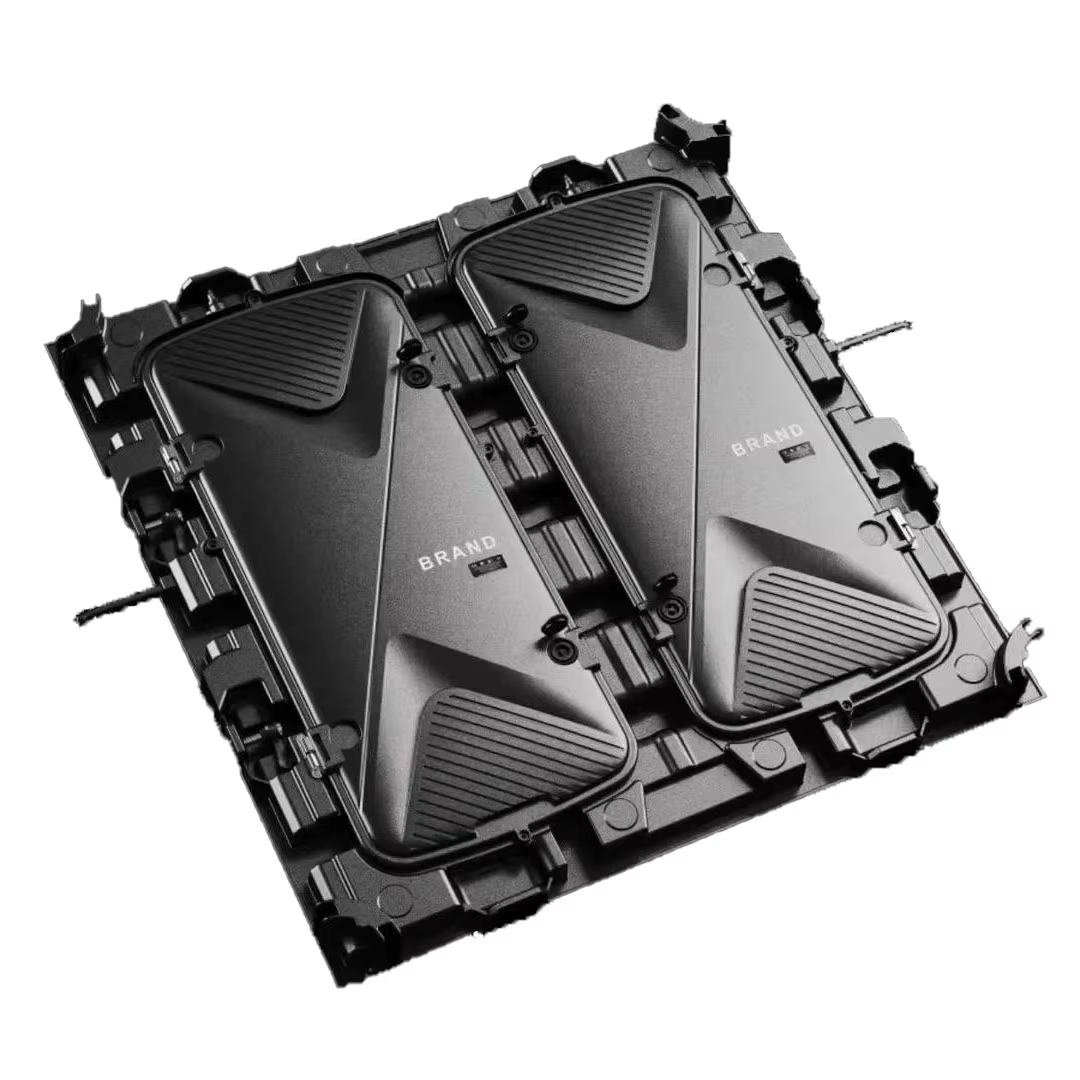
Why the Cabinet Matters as Much as the Pixels in a Boardroom Display
When planning a boardroom LED video wall, most of the conversation naturally gravitates toward pixel pitch, resolution, and brightness specifications of the LED modules themselves. Yet the cabinet that houses those modules plays an equally critical role in determining how the finished display looks from executive seating positions just a few feet away. An led small-pitch cabinet must deliver more than structural support; it must maintain sub-millimeter flatness across its entire surface, dissipate heat efficiently to prevent color drift during long meetings, and allow front-access maintenance so that a single technician can service the display without disrupting the boardroom setting. This article walks through the specific cabinet characteristics that matter most for small-pitch LED installations in corporate environments and what to evaluate when comparing suppliers.
Flatness and Dimensional Accuracy at Close Range
Small-pitch LED displays, typically defined as having a pixel pitch of 2.5 mm or below, are designed for viewing distances of two meters or less. At this proximity, any deviation in cabinet flatness becomes immediately visible as uneven gaps, shadow lines, or moire patterns across the display surface. An led small-pitch cabinet engineered for boardroom duty should specify a flatness tolerance of no more than 0.2 mm across the entire module mounting plane. This level of precision is achievable primarily through die-cast aluminum manufacturing, where the entire frame emerges from a single mold cycle and undergoes CNC machining on all reference surfaces. Sheet metal cabinets, by contrast, accumulate tolerances at every bend and weld point, making consistent flatness difficult to maintain across a multi-cabinet array. When evaluating manufacturers, request flatness inspection data for their small-pitch cabinet series rather than accepting a general tolerance claim. Top-tier suppliers can provide coordinate measuring machine reports showing measured flatness values for individual cabinets or production batches.
Front Maintenance Design for Corporate Environments
Boardrooms are finished spaces with fixed walls, millwork, and often limited clearance behind the display wall. An led small-pitch cabinet with rear-access maintenance is effectively non-serviceable in most corporate installations without demolishing drywall or building a dedicated service corridor. Front-maintenance cabinets solve this problem by allowing individual LED modules to be removed and replaced from the front using a magnetic or vacuum suction tool, while the cabinet itself remains mounted to the wall. The best front-maintenance systems go a step further by enabling the entire cabinet to tilt or swing open for access to internal power supplies and receiving cards without requiring full disassembly of the video wall. When sourcing cabinets for boardroom projects, confirm that the front-maintenance mechanism has been tested for the expected number of service cycles, and ask whether any special tools are required. A well-designed front-access system keeps boardroom downtime to minutes rather than hours when a module needs attention.
Thermal Management and Quiet Operation
Boardroom displays often run for eight or more hours continuously, making thermal management a critical cabinet design consideration. Excess heat accelerates LED degradation and can cause color uniformity to drift as different sections of the display reach different internal temperatures. Die-cast aluminum cabinets inherently provide better heat dissipation than steel or iron alternatives because aluminum conducts thermal energy more efficiently. Beyond material choice, cabinet design should include ventilation channels or passive cooling fins that direct warm air away from the LED modules and toward the rear where it can dissipate into the wall cavity. Equally important in a boardroom context is noise. Active cooling with fans is sometimes used in large-format outdoor displays, but in a quiet executive meeting room, fan noise is a distraction. The best led small-pitch cabinet designs achieve adequate cooling through passive thermal management alone, keeping the display silent and the boardroom atmosphere undisturbed during critical presentations.
A Corporate Rollout Scenario
A multinational corporation with offices across 12 countries recently standardized on small-pitch LED displays for all executive boardrooms as part of a global AV refresh. The initial specification focused heavily on pixel pitch and processing hardware but gave minimal attention to cabinet design. In the first three installations, the AV team encountered two recurring issues: visible seam lines developing within weeks due to insufficient cabinet flatness, and difficulty servicing modules because the specified cabinets required rear access that the finished boardroom walls did not accommodate. After revisiting their specification, the team switched to an led small-pitch cabinet with die-cast aluminum construction, 0.18 mm flatness guarantee, and full front-maintenance capability. The remaining nine boardrooms were installed without seam issues, and a module replacement that would have previously required wall demolition was completed by a single technician in under ten minutes. This experience led the corporation to mandate minimum cabinet specifications alongside module specifications in all future AV procurement documents.
Finish, Aesthetics, and Integration
A boardroom display is as much a design element as it is a functional tool. The cabinet's visible edges, surface finish, and overall profile should complement the corporate environment rather than clash with it. Many manufacturers offer black powder-coated or anodized finishes that absorb ambient light and help the inactive display blend into the room when not in use. Edge alignment between cabinets should be tight and consistent, with no visible fasteners along the front frame perimeter. Wall-mounting systems integrated into the cabinet design should allow for micro-adjustment in all three axes so that installers can dial in perfect alignment across the entire video wall regardless of minor irregularities in the underlying wall surface. Inquire about the total installed depth of the cabinet system including the wall mount, as boardrooms often have depth constraints that rule out bulkier cabinet designs.
Frequently Asked Questions
What pixel pitch range qualifies as small-pitch for a boardroom display?
Small-pitch LED is generally considered to start at a pixel pitch of 2.5 mm and goes down to approximately 0.9 mm for currently available commercial products. For a typical boardroom with seating positions 2 to 5 meters from the display, a pitch of 1.2 to 1.8 mm provides a good balance between resolution and cost. The smaller the pitch, the more critical cabinet flatness becomes.
Is die-cast aluminum the only suitable material for a small-pitch boardroom cabinet?
While other materials can be used, die-cast aluminum is the industry standard for professional small-pitch installations because of its combination of flatness consistency, thermal conductivity, and light weight. Some manufacturers offer magnesium alloy cabinets that are even lighter for applications where weight is critical, though at a higher cost. Sheet metal cabinets are generally not recommended for boardroom small-pitch applications due to flatness limitations.
How important is the cabinet's flatness tolerance compared to the pixel pitch specification?
Flatness tolerance matters more as pixel pitch decreases. For a display with 2.5 mm pitch, a flatness deviation of 0.3 mm may be acceptable because viewing distances are typically greater. For a 1.2 mm pitch display viewed from 2 meters, even a 0.2 mm deviation can create visible artifacts. As a general rule, the cabinet flatness tolerance should be no more than 15 to 20 percent of the pixel pitch value for boardroom applications.
Table of Contents
- Why the Cabinet Matters as Much as the Pixels in a Boardroom Display
- Flatness and Dimensional Accuracy at Close Range
- Front Maintenance Design for Corporate Environments
- Thermal Management and Quiet Operation
- A Corporate Rollout Scenario
- Finish, Aesthetics, and Integration
- Frequently Asked Questions