
 EN
EN
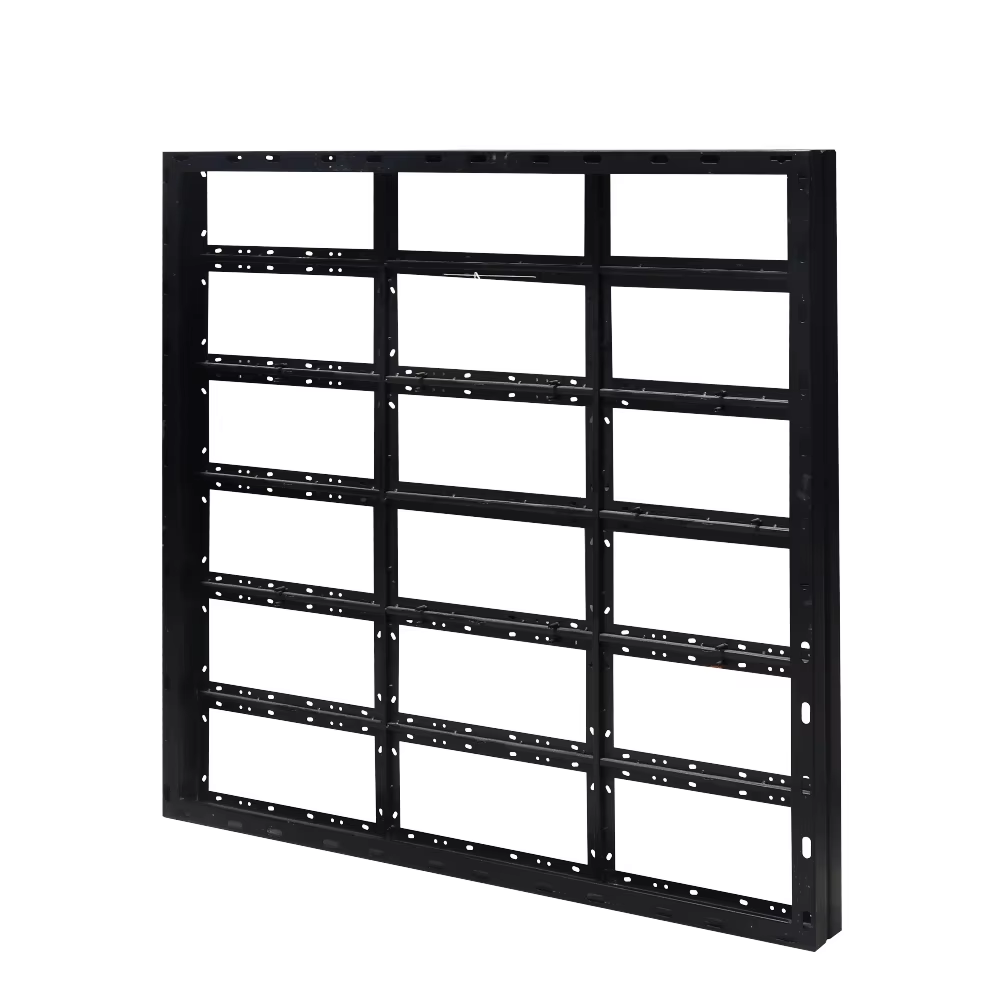
Global Market Adoption of the LED Cabinet 500x500
The LED cabinet 500x500 has become the dominant form factor in the indoor rental LED display market, driven by its unmatched balance of portability, structural integrity, and modular flexibility. This standardization allows rental companies to maintain smaller inventory stocks while meeting diverse event requirements.
Dominant market share: 78%+ adoption in indoor rental LED displays (LEDinside, 2023)
According to LEDinside’s 2023 industry report, the 500×500 mm cabinet now accounts for over 78% of indoor rental LED displays — the highest share among all standardized cabinet sizes. This reflects a broad industry consensus around a single, universally accepted dimension that streamlines manufacturing, simplifies assembly, and lowers total cost of ownership. For rental staging, concerts, and corporate events, the 500×500 unit delivers an optimal combination of weight (typically 8–10 kg for die-cast aluminum) and footprint, enabling rapid scaling to any screen size. Its widespread adoption means spare cabinets are readily available across global rental markets, minimizing downtime and logistical complexity.
Cross-brand compatibility: Unified mounting and power interfaces across 12+ leading manufacturers
A key driver behind the 500×500 standard is the near-universal agreement on mounting holes, locking mechanisms, data connectors, and power input locations. More than a dozen top-tier manufacturers—including Unilumin, Leyard, Absen, and Daktronics—design their cabinets to comply with this shared interface specification. This cross-brand compatibility enables integrators to mix panels from different suppliers on the same video wall without mechanical or electrical conflicts. For rental companies, it supports flexible, incremental inventory expansion across vendors while preserving full interoperability. Technicians also benefit from consistent rigging, cabling, and troubleshooting workflows — reducing training overhead and field errors.
Engineering Rationale Behind the LED Cabinet 500x500 Standard
Structural efficiency: Optimal weight-to-rigidity ratio for die-cast aluminum cabinets
The 500×500 cabinet achieves an ideal balance between weight and strength through precision die-cast aluminum construction. Unlike heavier steel alternatives or less durable magnesium or composite options, aluminum delivers high rigidity without compromising on-handling ergonomics — supporting safe, one-person installation. Its engineered frame distributes mechanical load evenly across large video walls, reducing stress on support structures and preventing panel misalignment during stacking. The material’s inherent thermal conductivity also aids passive heat dissipation, helping maintain stable performance during extended operation.
Pixel pitch alignment: Seamless integration with common indoor modules (2.5mm–3.9mm)
The 500×500 cabinet is purpose-built to accommodate the most widely deployed indoor pixel pitches — from 2.5mm to 3.9mm — without requiring adapters or custom modifications. Mounting hole patterns, module retention systems, and power/data routing are standardized across these pitches, ensuring mechanical and electrical compatibility. This design eliminates the need for redundant cabinet variants and simplifies inventory for rental fleets. It also supports uniform brightness, color reproduction, and refresh timing across mixed-pitch installations — critical for cohesive visual performance in high-impact environments.
Operational Advantages Driving LED Cabinet 500x500 Standardization
Rental logistics: 37% faster setup/teardown vs. non-standard cabinets (PVI Global, Q2 2024)
Standardized dimensions and integrated quick-lock systems make the 500×500 cabinet a logistics advantage for time-sensitive rental deployments. Crews can assemble and disassemble large-scale walls rapidly — often without tools — cutting average setup and teardown time by more than one-third compared to legacy or proprietary cabinet formats. This efficiency directly reduces labor hours, venue occupancy windows, and associated costs — especially valuable for multi-day festivals, touring productions, and tight-turnaround corporate launches.
Broadcast reliability: Consistent thermal management and signal uniformity across large-scale video walls
For broadcast and mission-critical applications, the 500×500 standard ensures predictable thermal behavior and signal integrity at scale. Die-cast aluminum frames act as passive heat sinks, distributing thermal load evenly and preventing localized hot spots that cause drift in color or brightness. Combined with unified power delivery and synchronized data routing across all compliant cabinets, the standard supports flicker-free, color-accurate performance — meeting the technical benchmarks required for live television, virtual production, and premium live events.
Future-Proofing the LED Cabinet 500x500 Standard
The 500×500 standard is engineered for long-term relevance. Its modular architecture supports backward- and forward-compatible upgrades — from next-generation micro-LED modules to advanced control processors — without requiring wholesale cabinet replacement. Cross-manufacturer interface consistency ensures ongoing access to spares, firmware updates, and service support, even as individual product lines evolve. By minimizing reliance on proprietary components and fostering ecosystem-wide interoperability, the standard safeguards capital investment against obsolescence — extending usable life across multiple generations of display technology.
FAQ
What is the LED cabinet 500x500 standard?
The LED cabinet 500x500 standard refers to the use of 500×500 mm die-cast aluminum cabinets for indoor rental LED displays. It provides a universal dimension ensuring compatibility, portability, structural integrity, and modular flexibility.
Why is the 500x500 cabinet dominant in the industry?
The 500x500 mm cabinet accounts for over 78% of the indoor rental LED display market because of its standardization benefits, including manufacturing efficiency, fast assembly/disassembly, and broad cross-brand compatibility.
Can the 500x500 cabinets be used across different manufacturers?
Yes, more than a dozen leading manufacturers design their cabinets to meet this shared interface specification. This ensures cross-brand compatibility for mounting, power input, and data connectors.