
 EN
EN
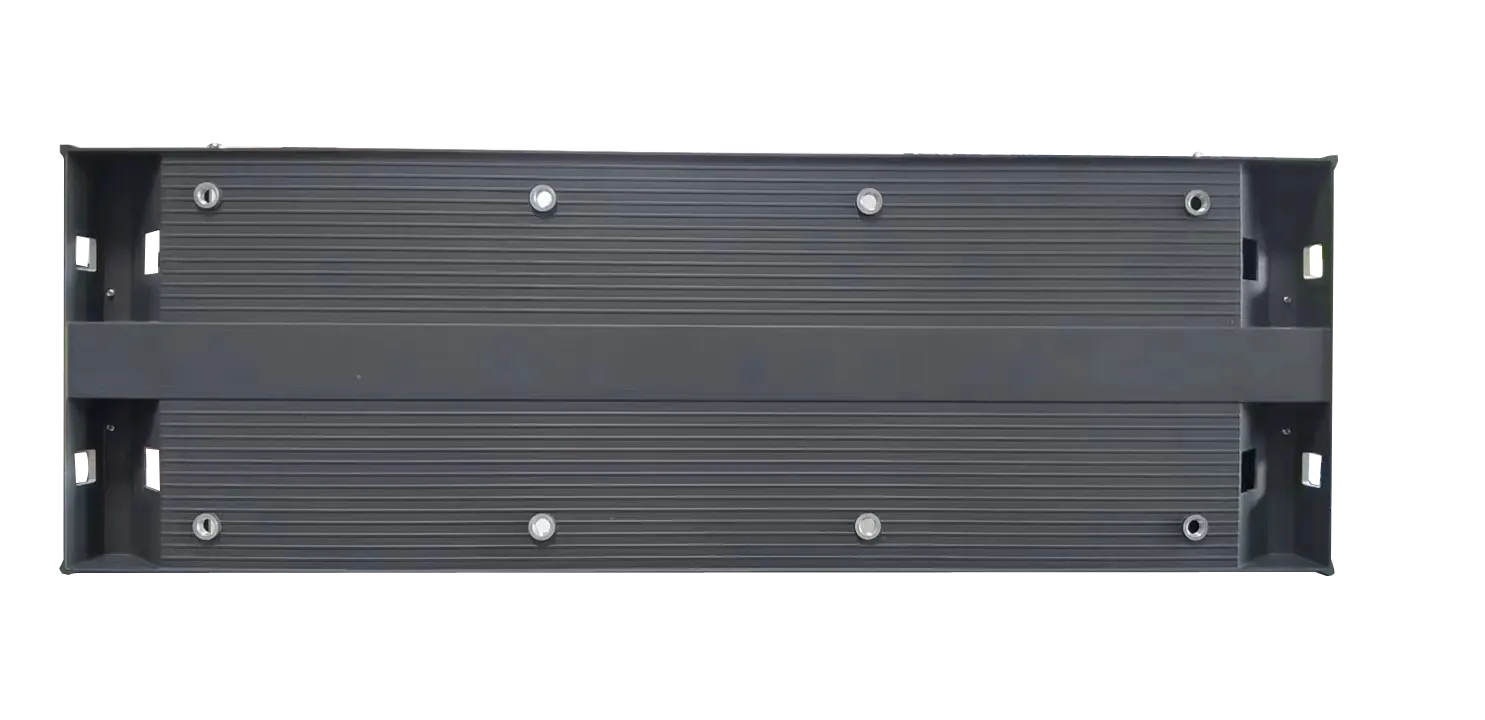
Why LED Front Maintenance Cabinets Solve Critical Space and Access Challenges
Rising Demand for Indoor Small-Pitch LED Screens in Tight Environments
Indoor small-pitch LED screens are increasingly deployed in retail stores, corporate lobbies, and transportation hubs—environments where wall space is premium and rear access is physically impossible. Traditional rear-service displays require up to 80 cm of clearance behind the screen for maintenance, rendering them impractical for flush-mounted or recessed installations. As organizations demand higher pixel density within constrained footprints, the ability to mount a display directly against a wall becomes decisive. LED front maintenance cabinets resolve this by enabling full access to modules, power supplies, and receiving cards from the front—eliminating the need for a rear maintenance corridor entirely. This design supports seamless integration with architectural elements while preserving visual impact and slim-profile aesthetics.
Front-Access Architecture Eliminates Rear Clearance — Saving Up to 60 cm per Wall
LED front maintenance cabinets sit flush against the wall, removing the traditional 60–80 cm rear service gap. Their architecture relies on magnetic or screw-locked front panels that technicians remove and replace without accessing the back of the installation. The recovered depth directly increases usable floor area—or allows narrower structural build-outs. In narrow corridors or control rooms, reclaiming even 60 cm can determine whether a large-scale video wall fits at all. Combined with ultra-thin, lightweight cabinet profiles, front-access systems reduce overall installation depth by up to 30% compared to rear-service alternatives—making them the preferred solution for architects and facility managers optimizing every square meter.
How LED Front Maintenance Cabinets Work: Modularity, Locking Systems, and Service Speed
Front maintenance cabinets use a modular architecture that positions all critical components—power supplies, receiving cards, and cabling—behind the LED modules on the front side of the cabinet. Technicians access every replaceable part from the screen face, eliminating rear clearance requirements. This workflow rests on three interlocking design principles: secure module attachment mechanisms, tool-less service access, and precision alignment for rapid, error-free swaps.
Magnetic, Screw, and Hybrid Locking Mechanisms — Trade-offs in Reliability and Speed
Three primary attachment methods dominate the market. Magnetic systems embed high-strength neodymium magnets in each module; technicians remove faulty modules in seconds using a suction cup. While fastest, they require precise alignment to prevent accidental detachment in high-vibration settings. Screw-based mechanisms—typically using hex wrenches—deliver maximum holding force and are preferred for outdoor deployments subject to wind loads and thermal cycling. Their trade-off is slower module removal. Hybrid designs combine magnetic quick-release with secondary screw locks, balancing speed and long-term reliability. According to industry benchmarks, hybrid-lock cabinets cut average module removal time by 40% versus screw-only systems—without compromising security.
Hot-Swap Module Replacement in Under 90 Seconds — Enabled by Precision Interlocking Design
Precision interlocking frames guide each module into exact alignment with adjacent tiles, eliminating manual adjustment during reinstallation. When a pixel fault appears, the technician applies a magnetic suction tool to the module face, pulls it straight off the cabinet, unplugs the ribbon cable and power connector, then snaps in the replacement. From removal to operational display, the entire hot-swap cycle takes under 90 seconds with an experienced technician. This speed is essential in high-uptime environments like control rooms, broadcast studios, and retail lobbies—where even brief black-screen intervals erode customer trust and revenue. The modular design also enables frontal replacement of individual power supplies and receiving cards without disturbing neighboring modules, localizing repairs and minimizing system-wide downtime.
LED Front Maintenance Cabinets vs. Rear-Service Alternatives: Safety, Downtime, and Total Cost of Ownership
Selecting between front- and rear-service LED cabinets significantly impacts installation speed, ongoing maintenance costs, and worker safety. LED front maintenance cabinets reshape total cost of ownership over the display’s life cycle—not just through hardware savings, but via reduced labor, risk mitigation, and uptime optimization.
Reduced Downtime: 68% Faster Installation & 4.2× Faster Module Replacement (Hospital Lobby Case Study)
A hospital lobby deployment demonstrated measurable advantages: installation completed 68% faster than with rear-service alternatives, primarily because no rear corridor had to be constructed or secured. During operation, a faulty module was replaced from the front in under 90 seconds—4.2 times faster than the rear-service method, which required moving equipment and re-entering a confined rear space. For mission-critical environments like hospital lobbies—where display uptime directly supports wayfinding, emergency messaging, and patient communication—this difference reduces operational disruption and lowers labor costs over time.
Safety & Compliance Benefits: No Ladder Use, No Confined-Space Entry, OSHA-Aligned Workflow
Rear-service installations often force technicians to work from ladders or crawl into tight spaces behind the screen—increasing fall risk and ergonomic strain. LED front maintenance cabinets eliminate both hazards: all servicing occurs from the front while standing safely on the floor. No ladder, scaffolding, or confined-space entry is needed—removing compliance burdens tied to OSHA standards for fall protection and confined-space permits. This safer, simpler workflow not only protects personnel but also streamlines project planning, reducing delays associated with safety documentation, rescue planning, and air-quality monitoring.
Future-Proofing Deployments: Integrating LED Front Maintenance Cabinets with Predictive Diagnostics
As digital signage networks scale, operators demand more than serviceability—they require intelligence that anticipates failure before it impacts operations. LED front maintenance cabinets provide the ideal hardware foundation for predictive diagnostics. Their modular, tool-less design allows integration of embedded sensors that monitor temperature, voltage drift, and pixel degradation in real time. When aggregated into a cloud-based analytics platform, this data triggers alerts for components nearing end-of-life—often weeks before visible faults appear. This shifts maintenance from reactive break-fix cycles to scheduled, low-impact interventions, dramatically increasing system uptime. In high-traffic zones—such as glass-walled retail corridors or transit hubs—technicians can pre-emptively swap a flagged module in under 90 seconds without disrupting surrounding infrastructure. Over a five-year deployment, this integration reduces total cost of ownership by eliminating emergency call-outs, minimizing spare-part inventory, and extending the functional lifespan of the display system.
FAQ
What are LED front maintenance cabinets?
LED front maintenance cabinets are display systems that allow all servicing and maintenance to be performed from the front of the screen, eliminating the need for rear access clearance.
Why are they suitable for tight spaces?
These cabinets sit flush against walls and eliminate the 60–80 cm rear service gap required by traditional rear-service displays, saving critical space in narrow or confined environments.
What are the primary benefits of magnetic and hybrid locking mechanisms?
Magnetic systems offer rapid, tool-free module removal, while hybrid systems combine magnets with screw locks for enhanced reliability in high-vibration settings, balancing speed and security.
Table of Contents
- Why LED Front Maintenance Cabinets Solve Critical Space and Access Challenges
- How LED Front Maintenance Cabinets Work: Modularity, Locking Systems, and Service Speed
- LED Front Maintenance Cabinets vs. Rear-Service Alternatives: Safety, Downtime, and Total Cost of Ownership
- Future-Proofing Deployments: Integrating LED Front Maintenance Cabinets with Predictive Diagnostics
- FAQ