
 EN
EN
Why Asking the Right Questions Matters Before You Commit
When sourcing an LED display cabinet manufacturer, the difference between a smooth project and a costly headache often comes down to the questions you ask before signing a contract. LED display cabinets serve as the structural backbone of any LED screen system, determining everything from heat dissipation performance and installation precision to long-term durability in outdoor environments. Many integrators and distributors focus heavily on the LED modules themselves while overlooking the enclosure that holds everything together. A poorly manufactured cabinet can lead to alignment drift, water ingress, thermal failure, or maintenance nightmares that erase your margin on a project. This guide outlines the essential questions to ask when evaluating a potential led display cabinet manufacturer, covering manufacturing processes, quality assurance, customization capabilities, and after-sales support, so you can make a confident, informed sourcing decision.
Evaluating Manufacturing Capability and Process Control
The first set of questions should address how the manufacturer actually builds its cabinets. Ask whether they use die-casting, CNC machining, or sheet metal fabrication as their primary method. Die-cast aluminum cabinets, for instance, offer better dimensional accuracy and lighter weight compared to welded steel enclosures, but only if the mold design and casting process are carefully controlled. Inquire about the tonnage of their die-casting machines, the precision of their CNC milling centers, and whether they perform in-house surface treatment such as powder coating or anodizing. A manufacturer with integrated production lines for casting, machining, surface finishing, and assembly can typically offer tighter tolerances and faster turnaround than one that outsources multiple steps. You should also ask about their total factory footprint and monthly production capacity. A facility spanning tens of thousands of square meters with dedicated production zones indicates the ability to handle volume orders without compromising quality. For example, some established manufacturers in Shenzhen have invested over 100 million RMB in facilities exceeding 30,000 square meters, operating multiple production lines for die-cast aluminum, iron, and specialty cabinet types.
Quality Assurance Standards and Testing Protocols
Quality consistency separates a reliable led display cabinet manufacturer from a transactional supplier. Ask which quality management certifications they hold and whether they follow ISO 9001 processes throughout production. Beyond paperwork, request details about their in-house testing protocols. Do they perform dimensional inspection on every batch using coordinate measuring machines? How do they verify surface flatness, a critical parameter that directly affects module alignment and seamless splicing results? For waterproof cabinets, ask about IP rating testing methods and whether each enclosure undergoes water spray or immersion testing before shipment. Request information about their raw material sourcing. Aluminum alloy grades such as ADC12 are commonly specified for die-cast LED cabinets because of their favorable strength-to-weight ratio and corrosion resistance, and a transparent manufacturer should be able to provide material certificates upon request. Some manufacturers recognized as National High-Tech Enterprises or Provincial Specialized and Sophisticated SMEs have invested in comprehensive in-house testing equipment, reflecting a commitment to quality that goes beyond basic compliance.
Application Scenario: A Common Sourcing Challenge
Consider a scenario where a North American AV integrator needed 500 outdoor cabinets for a stadium installation. The initial supplier quoted an attractive price but could not provide batch-level flatness inspection reports or IP65 test certificates. After switching to a manufacturer with documented quality procedures, the integrator received cabinets that met flatness tolerances within 0.3 mm and passed IP65 water spray testing on every unit. The project was completed on schedule with zero cabinet-related defects during installation, saving the integrator an estimated two weeks of rework that the first supplier's cabinets would have required. This example illustrates why quality verification questions are non-negotiable when vetting any led display cabinet manufacturer for mission-critical applications.
Customization Capabilities and Technical Support
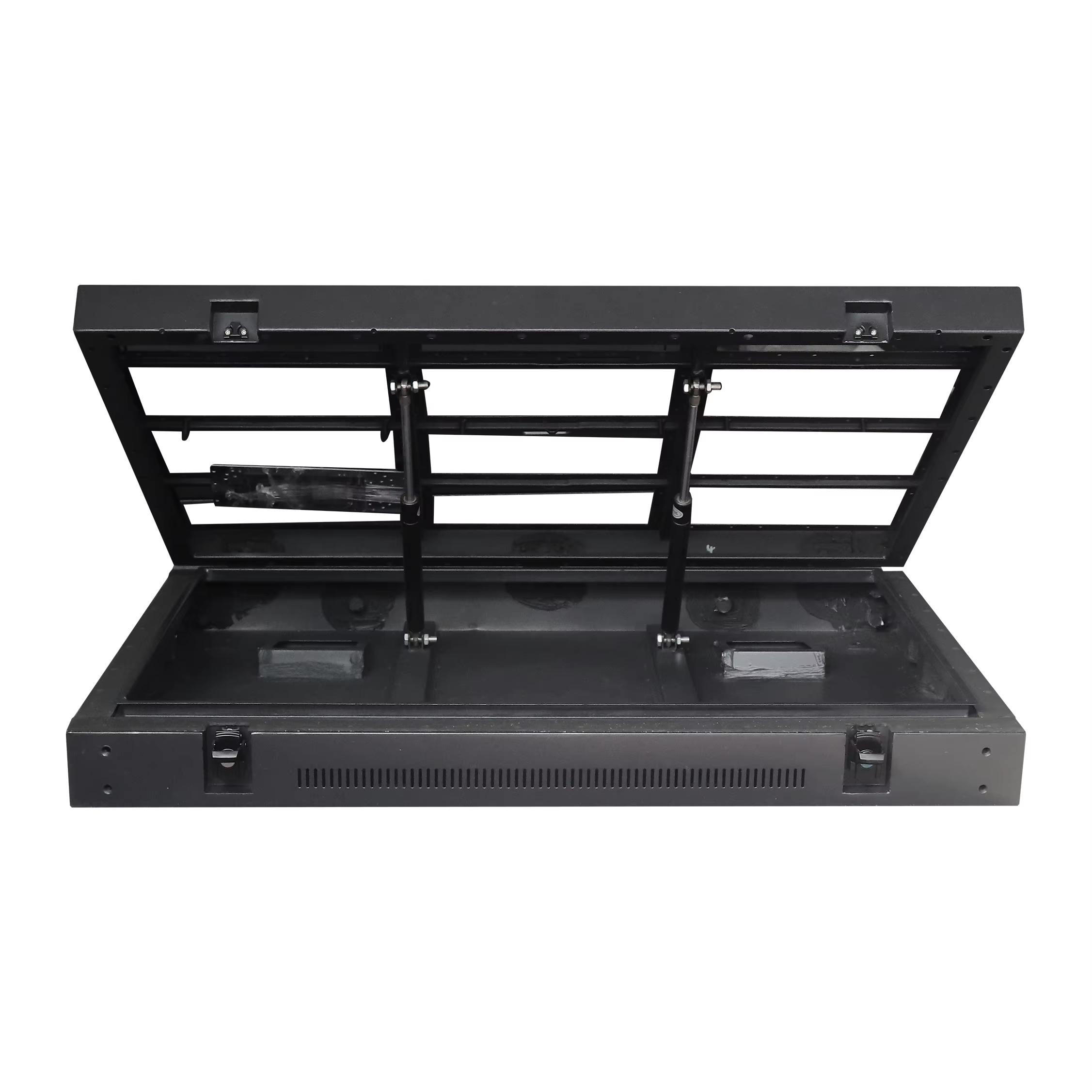
Standard cabinets work for many projects, but complex installations often require custom dimensions, unique mounting configurations, or special surface finishes. Ask the manufacturer whether they offer OEM and ODM services, their typical mold development lead time for new designs, and their minimum order quantities for custom runs. A capable manufacturer should be able to provide engineering drawings for approval before production begins and offer guidance on structural optimization based on your specific LED module dimensions and installation environment. Also ask about their experience with specialized cabinet types such as curved cabinets for cylindrical displays, front-maintenance cabinets for wall-mounted installations where rear access is limited, or lightweight designs for rental and staging applications. The depth of their engineering team is a useful indicator. Manufacturers with 20 or more engineering staff typically have the bandwidth to support custom projects while maintaining their standard production schedules.
Delivery Reliability and After-Sales Commitment
Production quality matters little if cabinets arrive late or damaged. Ask about typical lead times for both standard and custom orders, international shipping experience, and packaging standards. LED cabinets are precision components, so proper packaging with foam inserts, edge protectors, and reinforced flight cases or wooden crates is essential for preventing transit damage. Inquire about their export track record to your target region. A led display cabinet manufacturer that regularly ships to North America, Europe, or the Middle East will already be familiar with relevant packaging standards and documentation requirements, reducing the risk of customs delays or freight damage. Finally, ask about warranty terms, spare parts availability, and technical support response times. A manufacturer that stocks common replacement components and commits to a defined response window for technical inquiries demonstrates that they view the relationship as a partnership rather than a one-time transaction.
Frequently Asked Questions
What is the typical difference in cost between die-cast aluminum cabinets and iron cabinets?
Die-cast aluminum cabinets generally cost more per unit than iron cabinets due to the higher material cost of aluminum alloys and the precision tooling required for die-casting molds. However, die-cast aluminum offers superior heat dissipation, lighter weight, and better corrosion resistance, which can reduce shipping costs and extend the service life of outdoor displays. For many projects, the total cost of ownership favors aluminum cabinets despite the higher upfront price.
How can I verify a manufacturer's claimed IP rating for waterproof cabinets?
Request test reports or video documentation of their IP testing process. A credible manufacturer should be willing to share batch-level test data or, for large orders, allow third-party inspection during production. Specific tests for IP65-rated cabinets should include water jet spray from multiple angles at a specified pressure and duration, with post-test inspection confirming no internal moisture ingress.
What red flags should I watch for when visiting a potential cabinet supplier's factory?
Pay attention to whether the production floor is organized and clean, as disorder often correlates with quality inconsistency. Check if CNC machines and die-casting equipment appear well-maintained and in active use. Ask to see their quality inspection area and look for calibrated measuring instruments. If a manufacturer is reluctant to show you their testing equipment or production lines, or if their sample quality differs noticeably from their claimed capabilities, consider these warning signs.
Table of Contents
- Why Asking the Right Questions Matters Before You Commit
- Evaluating Manufacturing Capability and Process Control
- Quality Assurance Standards and Testing Protocols
- Application Scenario: A Common Sourcing Challenge
- Customization Capabilities and Technical Support
- Delivery Reliability and After-Sales Commitment
- Frequently Asked Questions